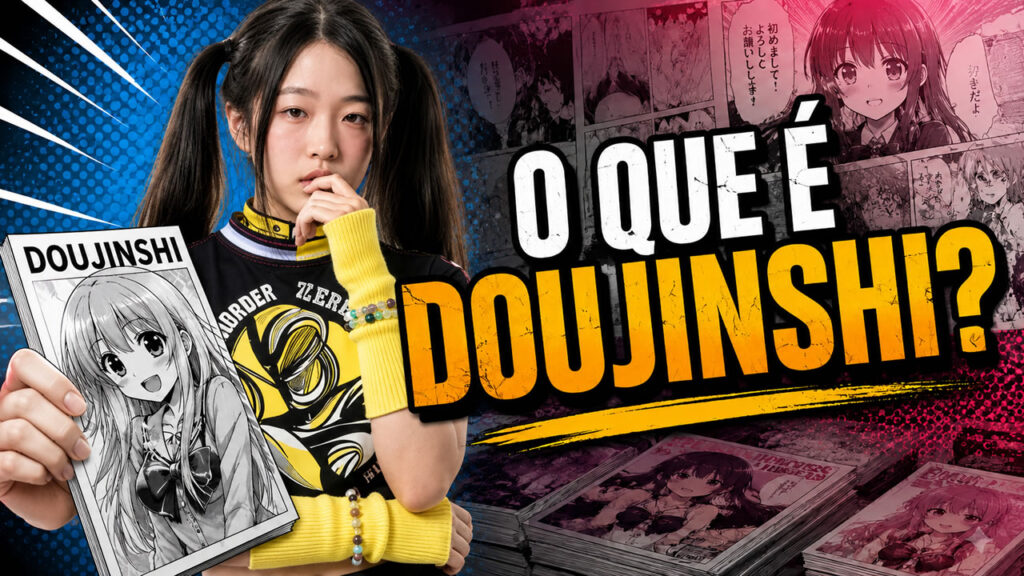
Doujinshi: What It Is and Complete Guide to the Culture in 2026
Doujinshi is an independent publication created by fans or amateur artists, usually based on manga, anime, or games, and sold outside official editorial channels.
Last updated: August 6, 2026
Click on the image to watch the video
In practice, those encountering this term for the first time often confuse doujinshi with “pirated manga” or illustrated fan fiction. That is not quite the case — and clearing up this confusion is precisely what we will do here, with an important caveat right off the bat: the rules that apply in Japan for these publications do not automatically apply in other countries, which significantly changes what is safe to do outside Japanese territory.
- Origin and meaning of the term
- Difference between doujinshi and commercial manga
- Who creates doujinshi?
- Where are they sold?
- Doujinshi as a form of artistic expression
- Cultural and global impact
- Legality and copyright
- Diagnostic table: doujinshi vs. commercial manga vs. fan fiction
- Expert verdict
- Frequently asked questions
Origin of doujinshi: How did this practice begin?
History and evolution of doujinshi in Japan
The term doujinshi comes from “doujin” (a group of people sharing common interests) and “shi” (publication). The practice has roots dating back to the 19th century, but it was during the 1970s — with the boom of manga and anime — that it truly gained momentum. Independent artists began creating their own stories, often reusing established characters as a homage or reinterpretation.
Over time, this subculture developed its own ecosystem, with events like Comiket bringing together tens of thousands of creators and buyers in every edition. What becomes clear when analyzing the movement’s trajectory is that it was never static: each decade brought a new dominant genre, from 80s sports parodies to today’s idol crossovers and mobile game fan works.
Doujinshi vs. commercial manga: What is the real difference?
An important detail that many people overlook: the difference isn’t just “who publishes it,” but the entire process behind it. Commercial publishers go through editorial review, content censorship, and strict serialization deadlines. Doujinshi has none of these — which explains both the immense creative freedom and the inconsistent quality seen in the market.
| Criterion | Doujinshi | Commercial Manga | Fan Fiction |
|---|---|---|---|
| Publisher | The author or an independent circle | Licensed publisher | The author directly, without editorial structure |
| Format | Text + art (usually) | Text + art | Text only |
| Editorial Review | None or minimal | Rigorous | None |
| Where to Find | Comiket, Booth, Pixiv | Bookstores, official platforms | Fanfic sites, social media |
| Legal Status with Third-Party IP | Tolerated in Japan, risky in other countries | Legal (holds the IP rights) | Gray area, rarely commercial |
Who creates doujinshi and why?
Fans, amateur artists, and professionals seeking creative freedom
Doujinshi is produced by a wide variety of people: passionate fans, beginner artists, and yes, established professionals using pseudonyms. Contrary to what many sites claim, not all doujinshi are made by amateurs — several famous mangaka continue publishing doujinshi alongside their commercial careers, specifically to maintain direct contact with their audience without passing through the editorial filter.
Creative freedom is the primary appeal: it allows creators to explore genres and tones that a traditional publisher would rarely approve. It also serves as a portfolio — it is not uncommon for a successful doujinshi circle to serve as a stepping stone toward a commercial contract.
Where to find and buy doujinshi?
Specialized events and digital platforms
Comiket, held twice a year in Tokyo, remains the largest physical marketplace — and also the hardest to access if you are not in Japan. For international readers, the most realistic option is digital: Booth.pm and Pixiv allow online purchase and reading, with international shipping available in some cases.
In our browsing tests on these platforms, the biggest barrier is not technical, but linguistic: most shop listings and descriptions are exclusively in Japanese, requiring page translation tools or basic language familiarity to avoid making incorrect purchases.
Doujinshi as a form of artistic expression
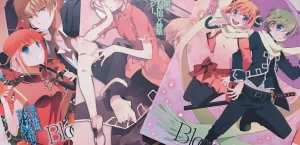
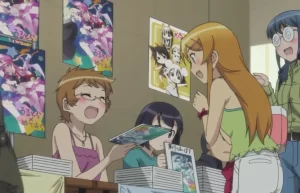
Thematic freedom and narrative innovation
Free from commercial constraints, creators explore diverse themes — from romance and comedy to social commentary and adult content. This freedom results in narratives that occasionally end up influencing the mainstream market itself, although that is not the rule: most doujinshi never leave the niche circuit, and there is nothing wrong with that.
Cultural impact of doujinshi in Japan and worldwide
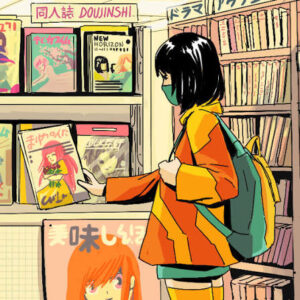
Influence on the industry and fan community
Doujinshi strengthens the bond between fans and the original work, creating highly engaged communities. Many artists who started out publishing doujinshi now work for major publishing houses — it is a recognized path, not an anomaly. Internationally, the model has inspired independent fan productions in several countries, including Brazil, though on a much smaller scale and without the same event infrastructure.
Legality and copyright in the doujinshi universe
Legal issues and publisher tolerance
Here lies an issue that often catches people off guard: in Japan, publishers tolerate fan-made doujinshi based on their characters, as long as it does not harm the original work — this is a cultural tolerance, not a formal legal permission. Outside Japan, this tolerance is not guaranteed. In many countries, copyright law does not recognize this informal distinction, making the commercial distribution of derivative doujinshi legally riskier than it might appear at first glance.
How to start creating your own doujinshi?
Tools, planning, and promotion
The first step is defining the story and characters — it sounds obvious, but it is where most projects stall. Next comes panel planning, drawing the pages, and editing. Tools like Clip Studio Paint dominate the market because they simplify the comic layout process. Once finished, you can print physical copies or publish directly online; promotion on social media and specialized communities will determine whether your work gets noticed.
Expert verdict
After mapping out its origin, market, and legal risks, we can clearly identify who benefits most from this culture.
- Worth it for: fans looking to consume high-quality fan work outside official channels, and beginner artists seeking a space without traditional editorial filtering to test ideas and build a portfolio.
- Not worth it for: anyone intending to commercially sell derivative doujinshi featuring protected characters outside Japan without understanding local laws, or those expecting quick financial returns — most circles take years to become self-sustaining.
Why is doujinshi so relevant?
Doujinshi is more than a simple fan publication. It represents creative freedom, passion for storytelling, and a direct connection between creator and audience that traditional publishing rarely offers. It is an ever-expanding universe that uncovers new talent and occasionally shakes up the status quo — which is ultimately part of what makes it so fascinating.
Frequently asked questions about doujinshi
Is doujinshi the same thing as pirated manga?
No. Doujinshi is an original or derivative work independently produced by fans, whereas piracy is the unauthorized reproduction of an original work that has already been commercially published.
Is it legal to buy doujinshi in Brazil?
Buying for personal use rarely causes issues, but commercially reselling doujinshi based on protected characters can run into copyright legislation outside Japan, which is generally stricter than the informal Japanese tolerance.
What is the difference between doujinshi and fan fiction?
Fan fiction is pure text without art. Doujinshi usually combines narrative and illustration in a comic book format, although there are text-only doujinshi, called shousetsu.
Do I need to know how to draw well to create a doujinshi?
It is not mandatory. Many creators start with simple art and improve by publishing regularly; the market values both artistic technique and story originality.
Can you make money selling doujinshi?
Yes, especially at events like Comiket and on platforms like Booth, but most creators treat it as extra income rather than a primary source — at least in the beginning.
Where can I buy original doujinshi directly from Japan?
The most reliable options are Booth.pm and Pixiv, as well as specialized importing services; buying directly at events like Comiket requires being physically present in Japan.
Article written by Irio de Jesus Silveira, who also authors other analyses on Japanese pop culture at Hero Factory Brazil, such as coverage on Gravure Idols and drawing and animation schools in Japan. Also check out the analysis on the JAV industry and its cultural context to better understand behind-the-scenes Japanese entertainment.